Cross stitch for beginners
What you need
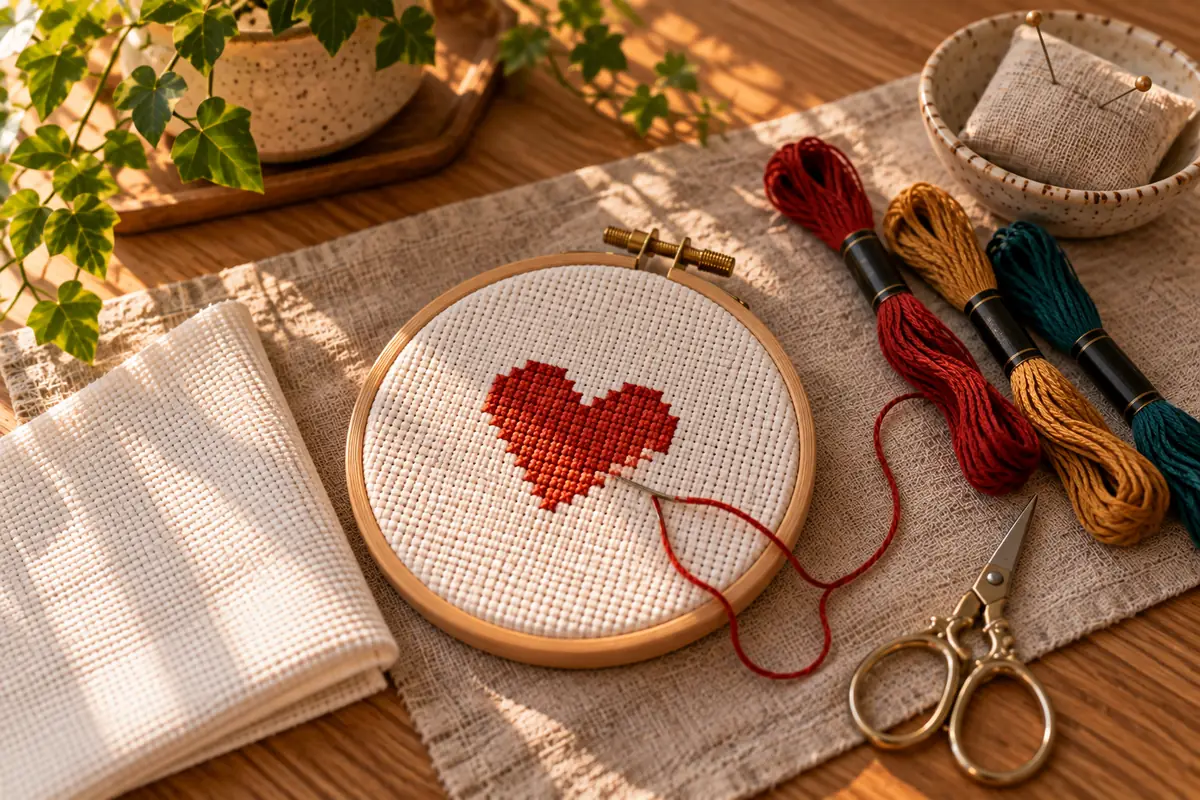
- Fabric
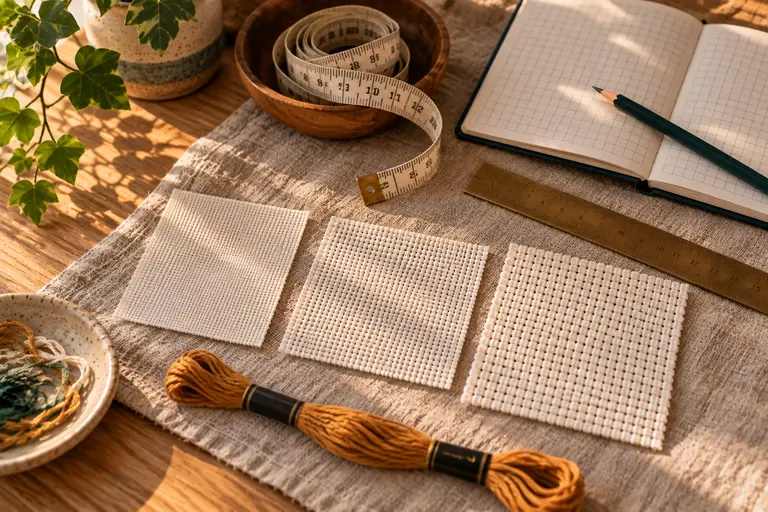
- 14-count Aida in white or cream. The holes are easy to see and count.
- Floss
- DMC six-strand embroidery floss in the colors your pattern lists. One skein of each is plenty for a small piece.
- Needle
- A size 24 tapestry needle. Its blunt tip slides through the holes without splitting the fabric.
- Hoop
- A 6 inch (15 cm) embroidery hoop keeps the fabric tight while you stitch.
- Scissors
- Small, sharp scissors for trimming floss close to the fabric.
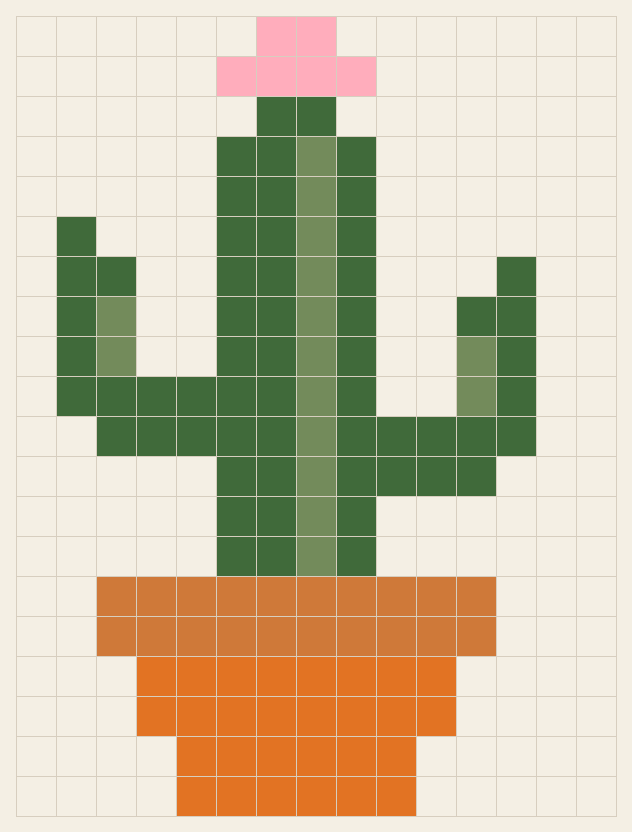
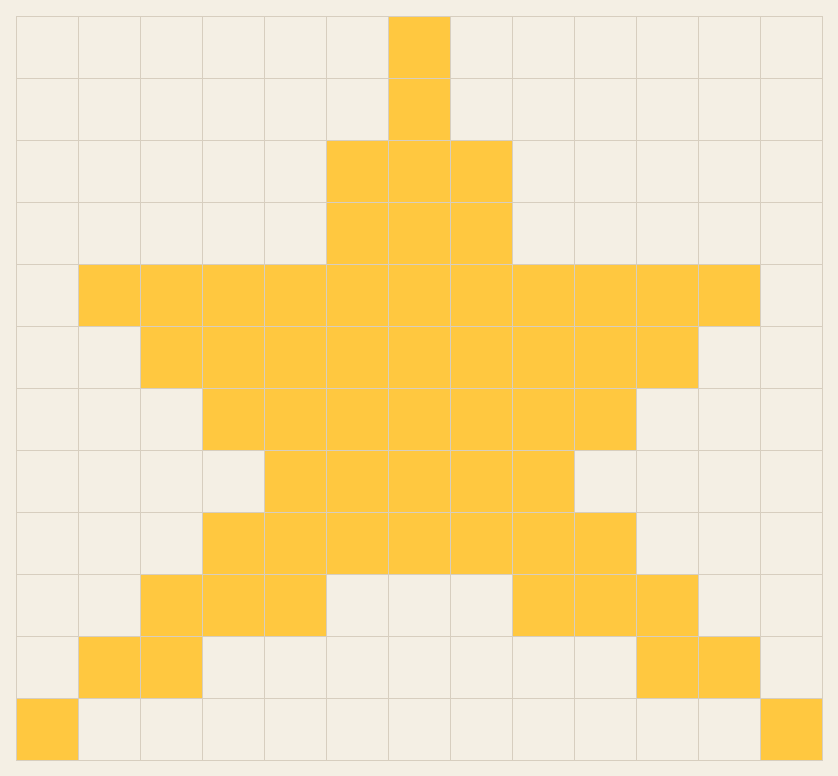
Pick a first pattern
Work out how much fabric to buy
- Finished size
- 10.0 × 7.1 in
- Stitches
- 140 × 100
- Fabric to cut (3 in spare per side)
- 16.0 × 13.1 in
- Skeins of floss (100% coverage)
- 7.0 used · buy 8
- Display hoop (stitch in 6–8 in)
- 14 in (36 cm)
- Frame with a 2 in mat
- 16 × 12 in
On 14-count Aida with 2 strands. Whole 8 m DMC skeins are rounded up from the estimated thread used (including a 20% waste allowance). For multi-color designs, round up each DMC color separately.
| Fabric | Finished (in) | Cut (in) |
|---|---|---|
| 11-count Aida | 12.7 × 9.1 | 18.7 × 15.1 |
| 14-count Aida | 10.0 × 7.1 | 16.0 × 13.1 |
| 16-count Aida | 8.8 × 6.3 | 14.8 × 12.3 |
| 18-count Aida | 7.8 × 5.6 | 13.8 × 11.6 |
| 20-count Aida | 7.0 × 5.0 | 13.0 × 11.0 |
| 22-count Aida | 6.4 × 4.5 | 12.4 × 10.5 |
| 25-count Evenweave over 2 | 11.2 × 8.0 | 17.2 × 14.0 |
| 28-count Evenweave over 2 | 10.0 × 7.1 | 16.0 × 13.1 |
| 32-count Evenweave over 2 | 8.8 × 6.3 | 14.8 × 12.3 |
| 25-count Linen over 2 | 11.2 × 8.0 | 17.2 × 14.0 |
| 28-count Linen over 2 | 10.0 × 7.1 | 16.0 × 13.1 |
| 32-count Linen over 2 | 8.8 × 6.3 | 14.8 × 12.3 |
Your first stitches
1. Cut and hoop the fabric
Cut the fabric 3 inches (8 cm) larger than the finished design on every side. Fold it in half twice to find the middle, then put it in the hoop so it is tight like a drum.
2. Separate two strands
A skein has six strands twisted together. Cut an arm-length piece, then pull two strands out one at a time. Most patterns on this site use two strands.
3. Start in the middle
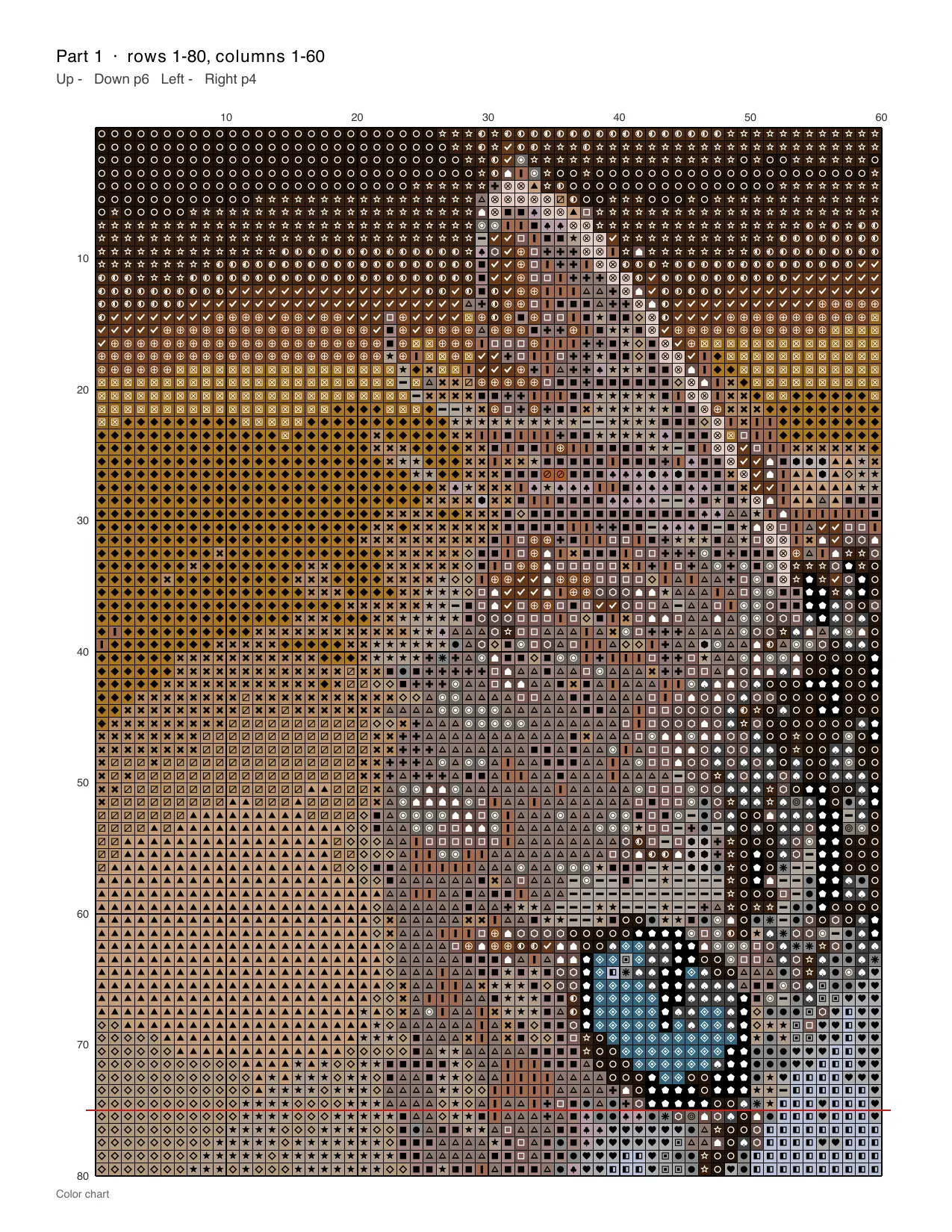
The pattern has center lines. Start the first stitch at the middle of the fabric, on the square where the center lines cross, and count out from there.
4. Make a cross
Bring the needle up at the bottom left of a square and down at the top right. That is half a cross. Come back up at the bottom right and down at the top left to finish it.
5. Stitch rows of one color
For a row of the same symbol, work all the first halves along the row, then come back along the row with the second halves. Keep every top stitch leaning the same way.
6. Finish the thread
Slide the needle under three or four stitches on the back and trim. Avoid knots: they make lumps under the finished piece.
Questions
What is the easiest cross stitch pattern for a beginner?
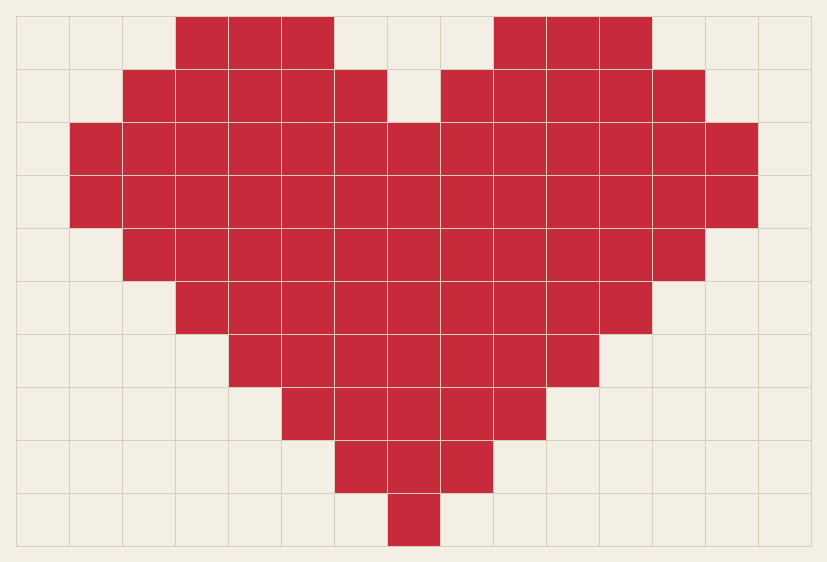
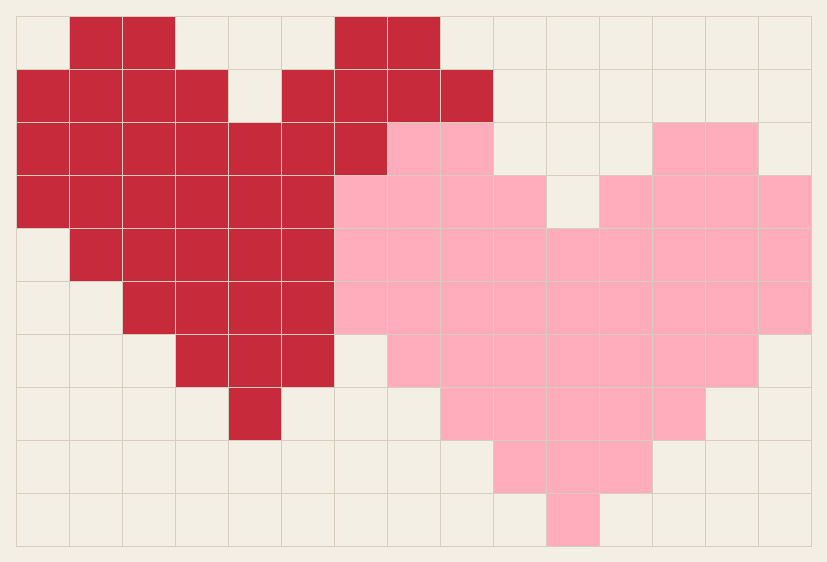
A small full-cross pattern with 1 to 6 colors and no half stitches or backstitch, such as a heart, tulip, star, or simple animal face. It finishes in one or two evenings and teaches every core skill.
Which Aida count should a beginner start with: 14, 16, or 18-count?
Start with 14-count Aida and a size 24 blunt tapestry needle. The woven holes are easy to see without a magnifier, and 2 strands of DMC floss fill the squares cleanly. Move to 16-count or 18-count later if you want finer, smaller detail.
Does fabric quality (like Zweigart Aida) matter for a larger project?
For small practice motifs, any standard 14-count cotton Aida works fine. For a multi-week full-coverage painting with thousands of stitches, evenly woven cotton Aida (such as Zweigart) stays square instead of warping into a rectangle and frays much less in your hoop.
How should I organize my DMC floss before starting a project?
Wind each skein onto a numbered plastic or cardboard bobbin, or store each color in a small labeled floss bag with both the DMC code and chart symbol written on it. Keeping close shades separated prevents accidental mix-ups mid-row.
Do I need an embroidery hoop, and what size should I buy?
A hoop is optional, but a 6-inch or 8-inch wooden/plastic hoop or Q-snap keeps fabric drum-tight and makes stitches far more even. Even for large 10-inch paintings, stitch comfortably in a 6–8 inch working hoop and move it as you go, then frame or mount in a larger display hoop when finished.
How much spare fabric should I leave around my pattern?
Leave at least 3 inches of extra fabric on every side (+6 inches total to width and +6 inches to height) so your cloth fits easily in a hoop and has enough border for framing. Use our free fabric calculator above to get exact cut dimensions.
How do I turn my own photo into a beginner-friendly pattern?
Open our cross stitch pattern creator on the home page, crop tightly to your subject, pick the Small (up to 60 × 60 stitches) preset with Simple colors (20 shades), and download the free printable PDF with DMC thread key and skein list.
Related tools
- Cross stitch calculatorHow big it will be, how much fabric to cut, which hoop, how many skeins.Open the tool
- Free patternsReady-to-stitch charts, from a tiny heart to Van Gogh, each a free PDF.Browse the patterns
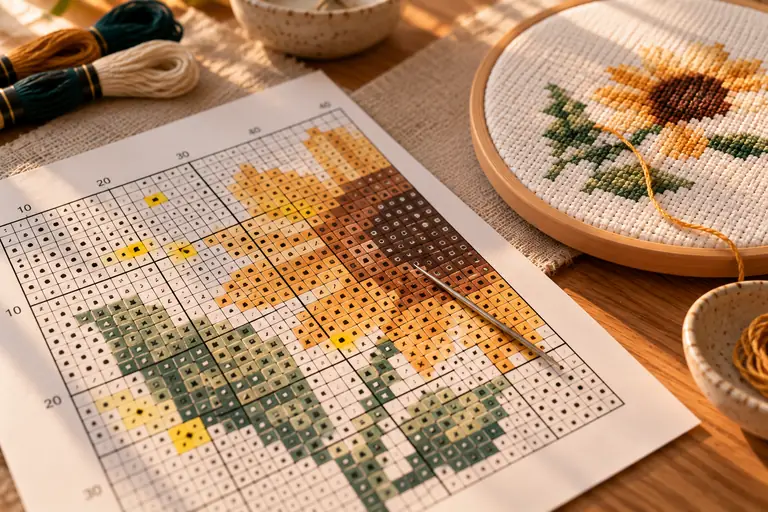
- How to read a patternSymbols, the key, and where to start stitching.Read the guide
- DMC floss color chartLook up any DMC number or the closest match to a color, and print the chart.Open the tool